The Deceitful Nature of Fashion References
Let me start by prefacing that I do not hate references; my judgment comes down to whether it is done right. I am aware that not every designer operates in bad faith (you will understand what I mean in a second). If you think this is my slam on anyone referencing anything, then you’d be wildly wrong. This article is in no way blindly hating on referential fashion; it is my thoughts on the relationship between us, social media, and the discussions of references in fashion, and where that has led us.
Also, this has nothing to do with how we look at clothes, but it has everything to do with how we talk about looking at clothes on the internet.
I recently started reading “Curating Capitalism: How Art Impacts Business, Management, and Economy,” only a couple of chapters in, but my perception of how art affects us has been redefined, and it has got me obsessing over the act of curation.
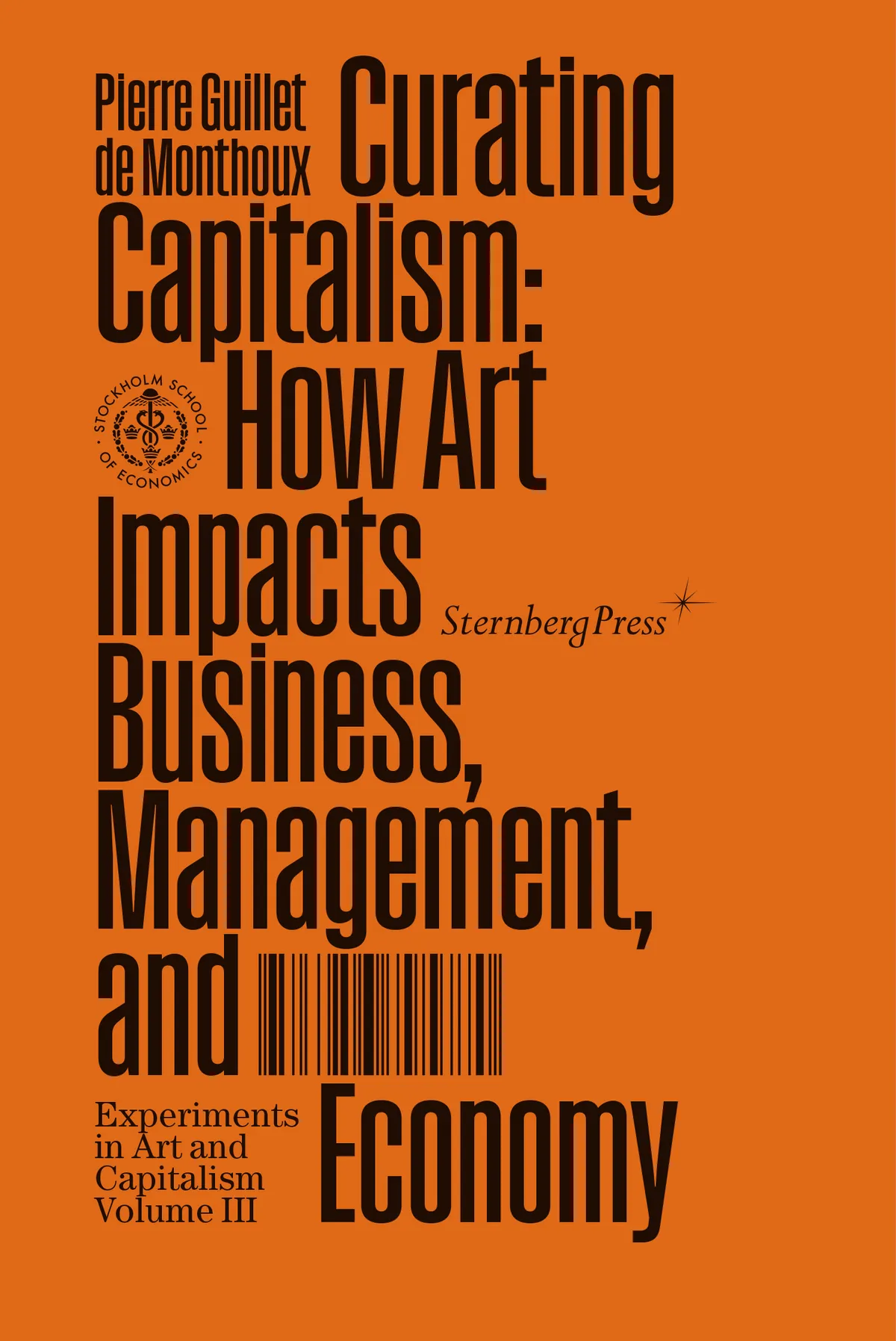
For me, curation has always been about museum and exhibitions, and it is indeed what the book focused on as the main premise, exploring the work of famous curators and philosophers such as Hans Ulrich Obrist, Bruno Latour and Jacque Ranciere, as well as their relationship and thoughts on the impact of curation and how carefully designed curation can effectively alter our view on society. In this book’s context, how art curation can affect future generations’ impact on capitalism, or simply, how we can curate capitalism by putting students through carefully planned exhibitions.
One immediate thing I learnt from reading the first 20 pages of this book is that the act of curation should not be a niche. The introductory knowledge and philosophy behind curation should not be a field studied separately, it should be a skill that every art student, every designer in training should attain over the duration of their course. The reason is simple: in a non-exhibition setting, there should not be an extra person between the creator and the audience to streamline or highlight a specific thought process that the art is trying to convey. That being said, if you, as a designer, are reasonably good at curation, it is likely that your art can communicate more efficiently. With an intention to curate a message or experience for the audience when showing your work, the message of your work should logically be amplified. It is this consciousness that every self-proclaimed artist or creator should learn to attain.
Now, I want to bring the concept of curation to the context of curating a fashion narrative around collections, to highlight a different form of curation, one I would call ominous. What if the curation of designs can lead to the ultimate curation of the audience’s reaction and reception of your work, to the point of almost controlling conversations and criticisms?
With the increasing number and potency of echo chambers on the internet, and the imminent cancel culture that is ready to take its next victim, we are ever more scared to express our authentic thoughts. A simple ‘I like this’ or ‘I dislike this’ may attract reckless comments such as ‘just say you don’t have taste.’ We don’t want to be attacked, and therefore we might find ourselves conforming with the general narrative surrounding a collection, or simply staying silent. I do have to note that this is a lousy generalization because in reality, there are many people who won’t succumb to this outrageous social media norm. However, there is definitely a conversation to be had around the suppression of authenticity in online spaces to avoid conflict. Once again, the situation isn’t black and white; this isn’t a do-or-die situation where you either conform to the echo chamber or be ready to be heavily and unreasonably criticized. There exists a middle ground that is safeguarded by objectivity, and that objectivity is referenced.
In recent years, referring to the past 2-3 years, it is apparent that many brands are resorting to what can be deemed as lazy referential fashion. It felt slapped on and meaningless at times. But who doesn’t love an easter egg hunt? Who doesn’t love the moment of ‘oh my god they are referencing [insert pop culture moment or history]?’
When the art presented isn’t 100% ambiguous, and your comments can now be partially objective due to the basis of noticeable references, it makes your criticism slightly more digestible, even for those who don’t agree with you. It isn’t entirely subjective anymore and therefore would (hopefully) not attract frustrating bouts of having someone disagree with you and force their subjectivity down your throat, even though the grounds of art criticism and debate are entirely based on validity more than agreeability. We saw that coming through, the online world is fuelled by emotions, logic doesn’t exist behind comments most of the time.
References aside, a fashion collection consists of a few things that could be a point of discussion: colors, proportion, style longevity, creative freshness, cohesiveness, trendiness, wearability, quality, and messaging, to name a few. With the seemingly infinite ways of interpretation, the objectivity of references limits our thoughts to a few possible paths. Let’s take designer Hedi Slimane as an example. Hedi Slimane is known for his deep admiration for indie rock music, and he is obsessed with dressing indie rock stars to match, or even amplify, that genre’s authenticity. This is a considerably known fact among fashion lovers, and is clearly reflected in his designs, namely the Dior Homme era. But what if it was never known? What if the fact that ‘Hedi loves indie rock’ was never made public, and we are left only with the images of skinny suits on these paper-thin male bodies walking down the runway with indie rock music playing in the back to work with? It is entirely possible that we would catch on, but that’s not certain. Taking away that information, now our perception of Hedi’s work is blown up completely. Is it indie rock? Is it Hedi Slimane’s love of black skinny suits like Thom Browne with grey tiny suits? Maybe Hedi Slimane is just a designer who doesn’t know anything else but to make skinny suits, and therefore that became his signature? The consistency behind many of his collections, which on the surface look quite similar, has now vanished, and in this position it isn’t far-fetched for us to say ‘Hedi Slimane’s blind obsession with skinny suits is artistically leading us nowhere.’ It is a debatable statement, but also a valid one. Imagine now a thoughtful collection with a dash of personal anecdote created from the bottom of Slimane’s heart, torn apart by people missing the point or those who got the references right but are treated like conspiracists.
But doubts don’t affect the validity of anyone’s interpretation; it’s always an ‘if you know you know’ type of situation. In the grand scheme, I am a firm believer that an object can be, but not necessarily, interpreted in a hundred different ways by a hundred different people. However, this also means that the collection failed to put forth a strong enough impression, which causes thousands of flimsy interpretations to exist. It isn’t the best thing for sales or brand image.
Now back to the ‘ominous means of curation.’ Combining our fear of being shut down and our discovery of how to safely position ourselves within this social media paradigm by utilizing an objective reference point, brands can easily control the general narrative of their creations by giving us something to start our thoughts with. With the same starting point, there can only be a limited variations of comments. By giving the audience the knowledge that Hedi Slimane, circling back to this example, is a fan of indie rock, his creations are now shrouded with the intention of either referencing or catalyzing the image of indie rock stars. The same goes to archive referencing, comments made will start and end with either this is a good reference or boring reference, but rarely a completely brand new assessment or criticism of its fundamental aesthetic. After all, taking this position means that you are also actively doubting the credibility of why the reference from years ago became worthy of a contemporary remake. The act of giving the audience a reference point, regardless of the reference’s actual significance to the designer,r seems to be a clever way for brands to control narratives and hyperfocus on a certain piece, boosting their visibility.
And this, can be quite deceitful if brands actually apply this tactic. Whose fault is that? If this is anyone’s fault at all.